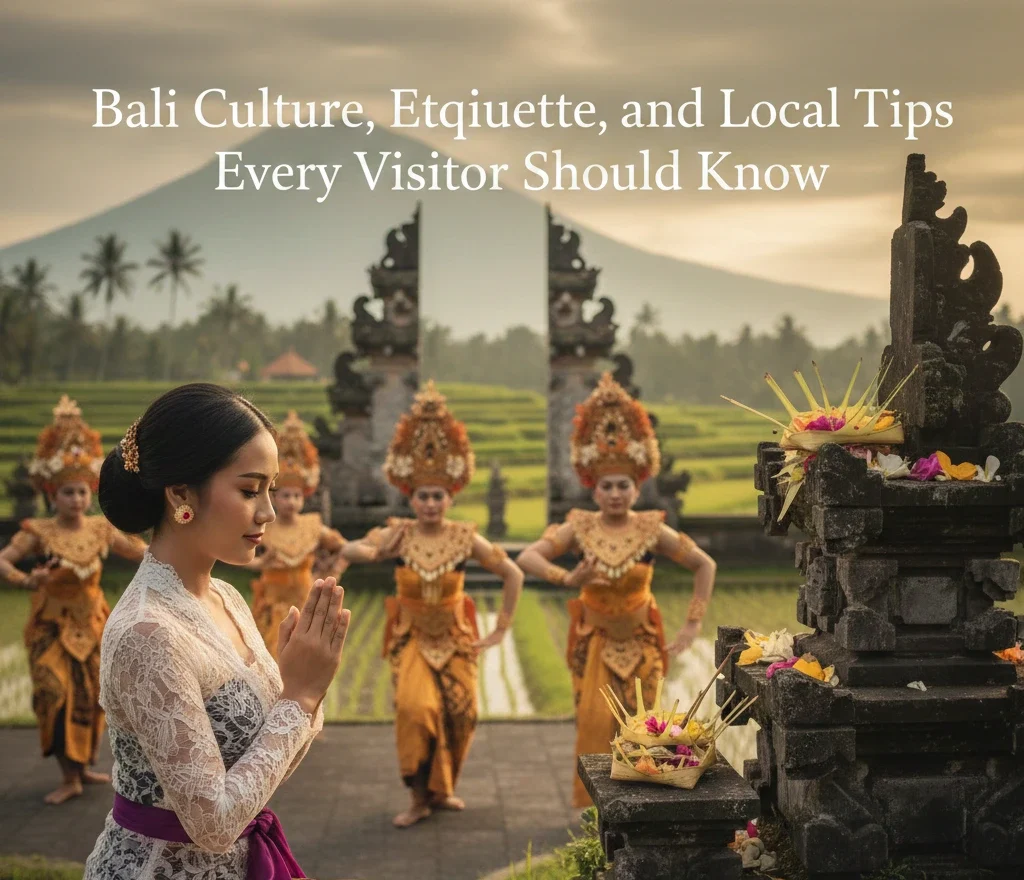
Bali is more than just beaches, villas, and sunsets. It is a deeply spiritual island where daily life is shaped by tradition, religion, and respect for community.
Many visitors unintentionally offend locals, not because they are rude, but because they don’t understand Bali’s cultural norms. Whether you’re visiting Bali for a short holiday or planning a long stay, knowing basic etiquette will help you avoid problems and enjoy a more meaningful experience.
This guide covers essential Bali culture, etiquette, and local tips every foreigner should know.
Understanding Balinese Culture
Bali is predominantly Hindu, unlike most of Indonesia. Religion is woven into daily activities, offerings are placed on sidewalks, ceremonies block roads, and temples are everywhere.
Key Cultural Values:
- Respect (Hormat) is more important than being right
- Harmony (Tri Hita Karana) governs relationships between people, nature, and God
- Community (Banjar) comes before individual needs
Ignoring these values is one of the fastest ways to get into trouble in Bali.
Temple Etiquette in Bali (Must-Know)
Temples are sacred spaces, not tourist attractions.
Do:
- Wear a sarong and sash when entering a temple
- Speak softly and behave calmly
- Follow temple rules even if others don’t
Don’t:
- Enter temples if you are menstruating (this is taken seriously)
- Climb temple structures for photos
- Point your feet toward shrines or priests
Local Tip: Many temples offer free sarongs, but bringing your own shows respect and saves time.
Dress Code: What’s Acceptable in Bali?
Bali is relaxed, but not careless.
Acceptable:
- Casual clothing in tourist areas
- Beachwear at the beach or pool
Not Acceptable:
- Walking shirtless outside the beach
- Wearing bikinis in shops or villages
- Revealing clothing near temples or ceremonies
In recent years, authorities have fined foreigners for disrespectful dress, especially in sacred areas.
Local Etiquette on the Street
On the Road:
- Always wear a helmet
- Don’t argue with police aggressively
- International driving license is required
On the Sidewalk:
- Watch out for canang sari (daily offerings)
- Stepping on offerings is considered disrespectful
Local Tip: If you accidentally step on an offering, a small apology gesture is appreciated.
Social Etiquette with Locals
Greetings:
- A smile goes a long way
- Use “Om Swastiastu” in formal situations
Communication:
- Avoid public confrontation
- Speak calmly, even in conflict
- Losing your temper is seen as losing face
Gestures to Avoid:
- Pointing with your foot
- Touching someone’s head
- Using the left hand when giving something
Behavior During Ceremonies
Ceremonies are not performances.
Do:
- Be patient if roads are closed
- Ask before taking close-up photos
- Dress modestly
Don’t:
- Interrupt rituals
- Walk in front of people praying
- Treat ceremonies as tourist shows
Living in Bali: Local Wisdom for Long-Stay Visitors
If you plan to stay long-term:
- Respect local noise levels
- Understand visa limitations
- Follow local regulations strictly
Many foreigners face legal issues not because of crime, but ignorance of visa and local rules.
Final Thoughts
Understanding Bali’s culture and etiquette isn’t about rules, it’s about respect. The more you respect local customs, the more Bali opens up to you in meaningful ways.
If you plan to visit, stay longer, or move to Bali, combining cultural awareness with the right visa is essential.
Planning to stay longer in Bali?
Make sure your visa matches your purpose and duration.
ApplyVisabali.com helps you choose the correct visa and avoid costly mistakes.